


10 of the Most Popular Succulents
- Sam

- Dec 10, 2022
- 5 min read
Below you will find a list of what I think are the 10 most popular succulents
(10.) Panda Paw
Panda paw plants are a hardy indoor succulent that make a great addition to any plant collection, usually a favourite for children's bedrooms.

Panda paws (Kalanchoe Tomentosa) are native the island of Madagascar. In the wild, panda plants often have a woody base and reach several feet tall. However as an indoor plant growth is limited by the size of the pot it sits in, usually only reaching only 1 to 2 feet in height and 2 feet around.
Red coloured markings on the leaf edges, along with the white-silvery hairs, are similar to the fur of a living panda, hence the name. These are super easy to care for and look good in any home!
(9.) Elephants Bush
Portulacaria Afra known as “Elephants Bush” is a large, bushing succulent with woody stems that can grow up to huge heights when given the perfect amount of time, nutrients, and growing conditions.
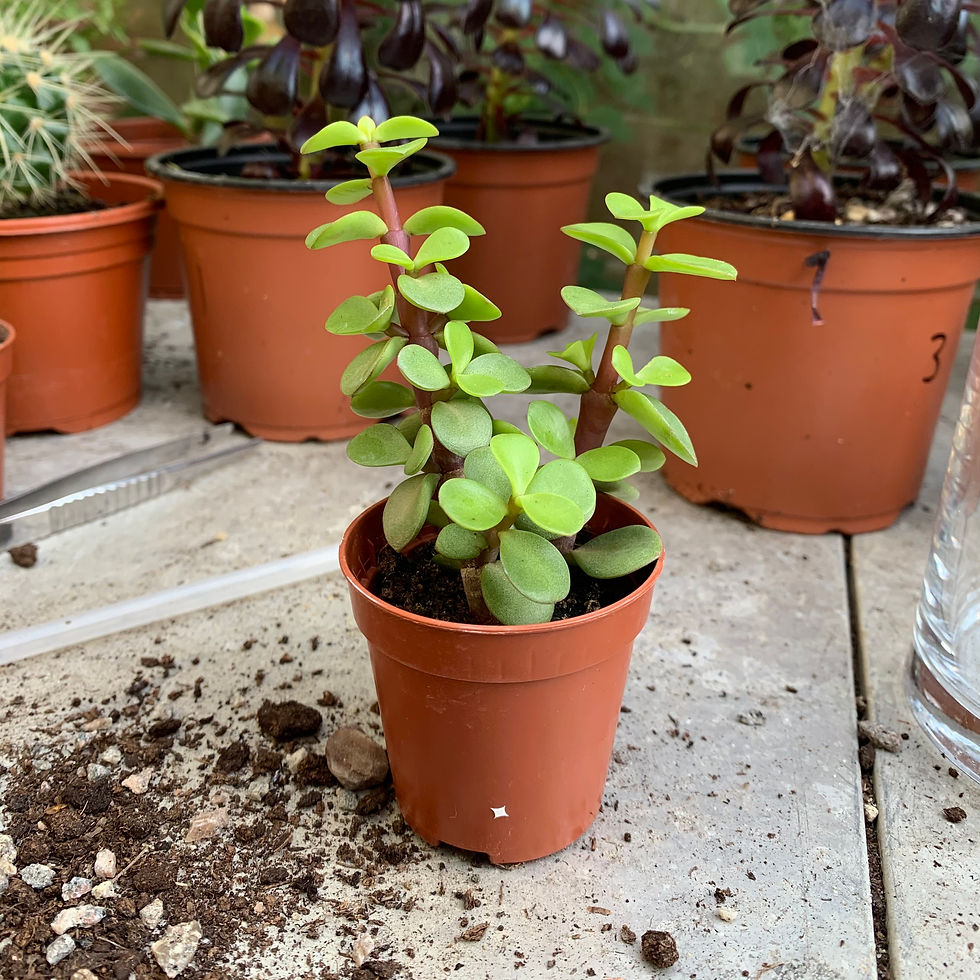
Being found natively in South Africa these succulents enjoy being in full direct sunlight but are more than happy to thrive in indirect sunlight if need be.
They are really simple to care for and make easy houseplants for a sunny location. In frost-free regions they can even be used in outdoor landscaping.
(8.) Jade Plants
Jade plants are members of the Crassulaceae family and native to desert regions of South Africa. Dutch settlers introduced the succulent to Europe over 100 years ago and it is still considered a firm favourite plant for indoor spaces.

Their continued popularity is mainly due to a Jade plant’s hardiness and lack of care they need.
Although it grows slowly, over time a well looked after Jade plant can still grow up to 6 feet tall indoors and plants have been known to live over 100 years!
The plant will rot and die if left in soggy conditions or if it is overwatered, so it’s only necessary to water when the top several inches of soil become dry.
(7.) Chinese Jade
Another sub-species of Jade plant, Sinocrassula Yunnanensis is a small perennial, rosette succulent which grows up to 4 inches (10 cm) tall, that can eventually develops into dense clumps.

With a velvety touch and feel to them, Chinese Jade plants help to create a cute and comfortable environment wherever they're kept. People often say that these resemble little hedgehogs, I'll leave that to you to decide.
When placed in a pot with a face on these plants give the impression of somehow with a wild bed head which can become a talking point when guests visit.
They are perfectly suited for planting in gravel gardens, paved areas and rockeries outdoors or try mixing with other succulents and alpines in indoor terrariums.
(6.) Golden Barrel Cactus
Echinocactus Grusonii which are mostly known as the golden barrel cactus are found in most people under the age of 25's bedrooms due to the lack of care they require.

It has long been one of the most cultivated cacti in the developed world, however in the wild this species of cacti is actually classified as endangered and at high risk of becoming extinct.
In the wild the golden barrel cactus can grow as a large roughly spherical globe, potentially reaching over 1 metre (3.3 ft) in height after many years. Young Golden Barrel plants do not look similar to mature specimens.
The average lifetime of the golden barrel cactus is estimated to be around 30 years.
(5.) Bunny Ear Cactus
Bunny ear cacti (Opuntia Microdasys) originated from Mexico and come from desert-like areas. Despite their fuzzy appearance an interesting fact about bunny ears is that they do not develop spines. Instead it grows tiny little glochids which are the short whitish brown prickles that you can see in the photo; which still manage to prick you!

In the home, it is relatively a slow growing plant that will likely reach only 2 feet in height. However it's adorable nature makes it a household favourite especially here in the UK.
As with most succulents, you can propagate a new bunny ear plant with a single pad taken from the cactus. But do take extreme caution when removing a leaf as the glochids can dislodge easily and are very difficult to remove from the skin; trust me they are cause considerable discomfort for their size!
(4.) Urbinia

Urbinia Purpussi is one of the slowest growing succulent species readily available for purchase. This makes them one of the best to buy, as they can be enjoyed for many years to come!
They are a mostly summer-growing and relatively easy to care for plant. It makes for a great decoration piece and is the perfect succulent for beginning collectors.
If yours gets enough sunlight, nutrients and the right amount of care you might even be lucky enough to see it flower in summer just like mine did this year!
(3.) Gollum Jade
If I had a pound for every time somebody told me that they believed Gollum Jade's looked like some kind of underwater plant I'd buy all you guys reading this a drink!

Crassula Ovata (Gollum Jade) is certainly one of the best loved succulents ever. Their unusual shapes and the way each one is so unique in it's own way always leaves me mesmerised at their beauty.
These plants are unusual in that they actively grow better in the cooler months of the year. Hence why the tips of the green tubular leaves often turn red when in full sunlight. Ensure that it is receiving plenty of sunlight to minimise the chances of the it stretching.
One fun fact is that the name Gollum Jade comes from the character of Gollum in J.R.R. Tolkien’s novels.
(2.) Split Rocks

Pleiospilos Nelii (split rock) grow well indoors due to the warmer temperatures and high humidity levels, making it perfect for a windowsill garden or terrarium.
I use these little succulents in almost every terrarium I create, I just absolutely love them. They are so unique and give an added layer of depth in a terrarium, often replacing decorative rocks and pebbles in my builds.
Funnily enough split rocks actually mimicked their environment over millions of years, growing in rocky regions. Therefore their appearance does in fact camouflage them, allowing them to keep out of harms way in the wild.
(1.) Bears Paw

Cotyledon tomentosa (Bears Paw) is a rather tender succulent that is guaranteed to get people talking when they see these around your home. The large 'chubby' leaves just look like the paws of a bear, hence the name
Each leaf is soft and fuzzy with a puffy look, they also have tiny “claws” on their edges. When the plant matures and is well cared for, the claws on the end of the leaves turn red/brown; making them look even more like a real paw.
These are native to Africa and are perfect for beginners looking to purchase their first succulent. These are perfect for parents to teach children how to take care of plants due to their childlike appearance and lack of attention required.


Comments